5 min read
Security Risks Are Insurance Risks: What L.A. Multifamily Owners Need to Know in 2026
SmartConnect L.A. : May 18, 2026
For most of the last two decades, security technology and property insurance lived in separate conversations. Owners thought about cameras and access control when they wanted to reduce nuisance complaints or replace aging hardware. They thought about insurance when their broker called with the annual renewal. Those two conversations have now collapsed into one — and the owners who recognize that shift are seeing it reflected in their bottom line.
If you operate multifamily property in Los Angeles, your building's security posture is no longer just an operations issue. It is a liability exposure, an underwriting variable, and increasingly, the difference between a renewable policy and a non-renewal notice.
The Legal Foundation: California Premises Liability
California holds landlords to one of the most plaintiff-friendly premises liability standards in the country. Under Civil Code Section 1714, every person owes a duty of ordinary care to prevent foreseeable harm to others. For property owners, the courts have built a substantial body of case law on top of that statute that defines what "ordinary care" looks like in the context of a multitenant building.
The controlling concept is foreseeability. A landlord is not the insurer of tenant safety — but they can be held liable when an injury results from a criminal act that was reasonably foreseeable and that reasonable security measures could have prevented. Cases like Ann M. v. Pacific Plaza Shopping Center and the line of decisions following it have established that the more foreseeable the harm, the more substantial the precautions a court will expect.
In practice, this means that prior incidents on or near the property — even relatively minor ones — raise the bar. A building in a neighborhood with documented property crime, prior break-ins, or known security complaints from tenants is operating in a context where a plaintiff's attorney can credibly argue that an assault, theft, or worse was foreseeable. If the security infrastructure on the day of the incident was a worn-out intercom and a single dome camera recording over itself every 72 hours, that argument becomes considerably easier to make.
The Insurance Market Reality
The habitational insurance market in California has been one of the hardest in the country for several renewal cycles running. Carriers have pulled back, layered in new exclusions, raised deductibles, and in many cases simply non-renewed accounts that don't meet their risk criteria. Wildfire exposure drives much of the headline conversation, but for urban multifamily owners the quieter story is the tightening underwriting around general liability and assault-and-battery coverage.
Carriers are now asking detailed questions during the underwriting process that would have been unusual five years ago. What does access control look like at the main entry? Are common areas under continuous video surveillance, and is footage retained long enough to support a claim investigation? Is there an audit trail showing who entered the building and when? Are package rooms and parking structures monitored? Several carriers now offer premium credits — or in some cases require, as a condition of binding — specific security technologies that materially reduce the foreseeability of a loss.
This shift is not theoretical. Large negligent-security verdicts and settlements in California multifamily and mixed-use properties have moved the actuarial needle. When carriers price an account, they are looking at both the inherent risk of the location and the quality of the controls the owner has put in place to mitigate it. A property with strong, documented, professionally maintained security infrastructure presents a fundamentally different risk profile than the property next door with the same address quality but a 2008-vintage intercom and analog cameras.
Where the Exposure Actually Lives
The friction points that generate claims and lawsuits in multifamily are predictable. Most of them are also addressable with current technology.
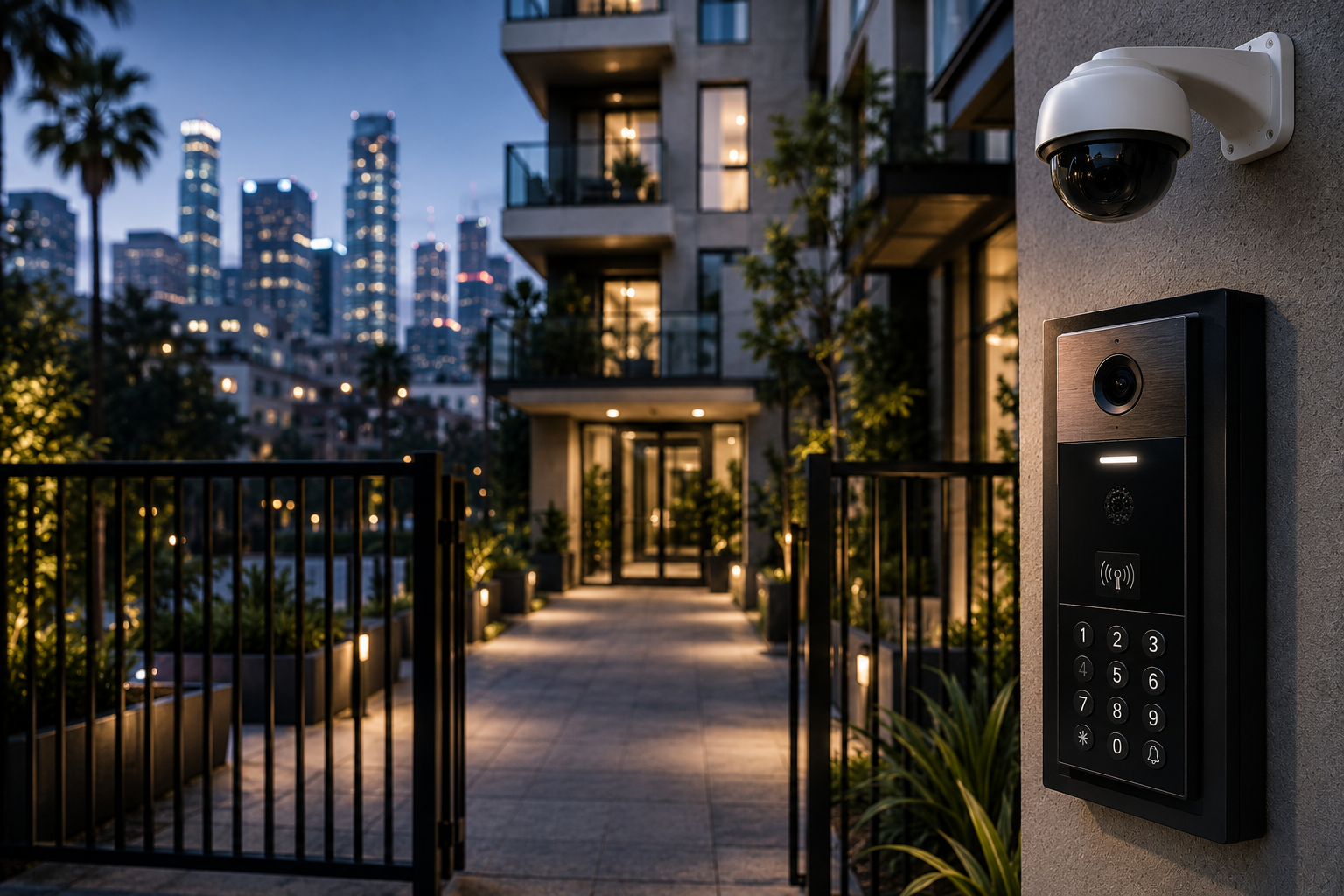
Unauthorized building entry. Tailgating remains the single most common access control failure in multifamily. A resident lets a delivery driver in, the driver lets in someone behind them, and the property has lost its first line of defense. Modern cloud-managed access control paired with video intercoms creates both deterrence and an evidentiary record. If an incident occurs, an owner who can produce a time-stamped video of the entry, the credential used, and the path through the building is in a meaningfully better position than an owner who can only produce a guest log.
Parking structures and garages. California courts have repeatedly identified parking structures as foreseeable locations for assault, particularly in dense urban submarkets. These spaces are also where the gap between what tenants expect and what is actually being monitored tends to be widest. Camera coverage with sufficient resolution to identify faces and license plates, combined with analytics that can flag loitering or after-hours activity in real time, has moved from premium feature to baseline expectation.
Common-area amenities. Pool decks, gyms, mailrooms, and package areas generate a disproportionate share of injury and property claims. The access control story for these spaces should be specific and auditable — not a shared physical key that has been copied an unknown number of times over the building's life.
Resident-on-resident and domestic incidents. These are difficult cases and no security system prevents all of them. But the presence of a clear video record and an accurate access log changes the dynamics of any subsequent investigation, claim, or lawsuit. So does the ability for a tenant to reach building staff or emergency services quickly through a modern intercom system.
What Underwriters Are Looking For
When SmartConnect works with owners and operators on security modernization, we increasingly find ourselves in the same conversation their insurance broker is having on the other line. The features that show up on underwriting questionnaires today are not exotic — but they do need to be in place, documented, and demonstrably maintained.
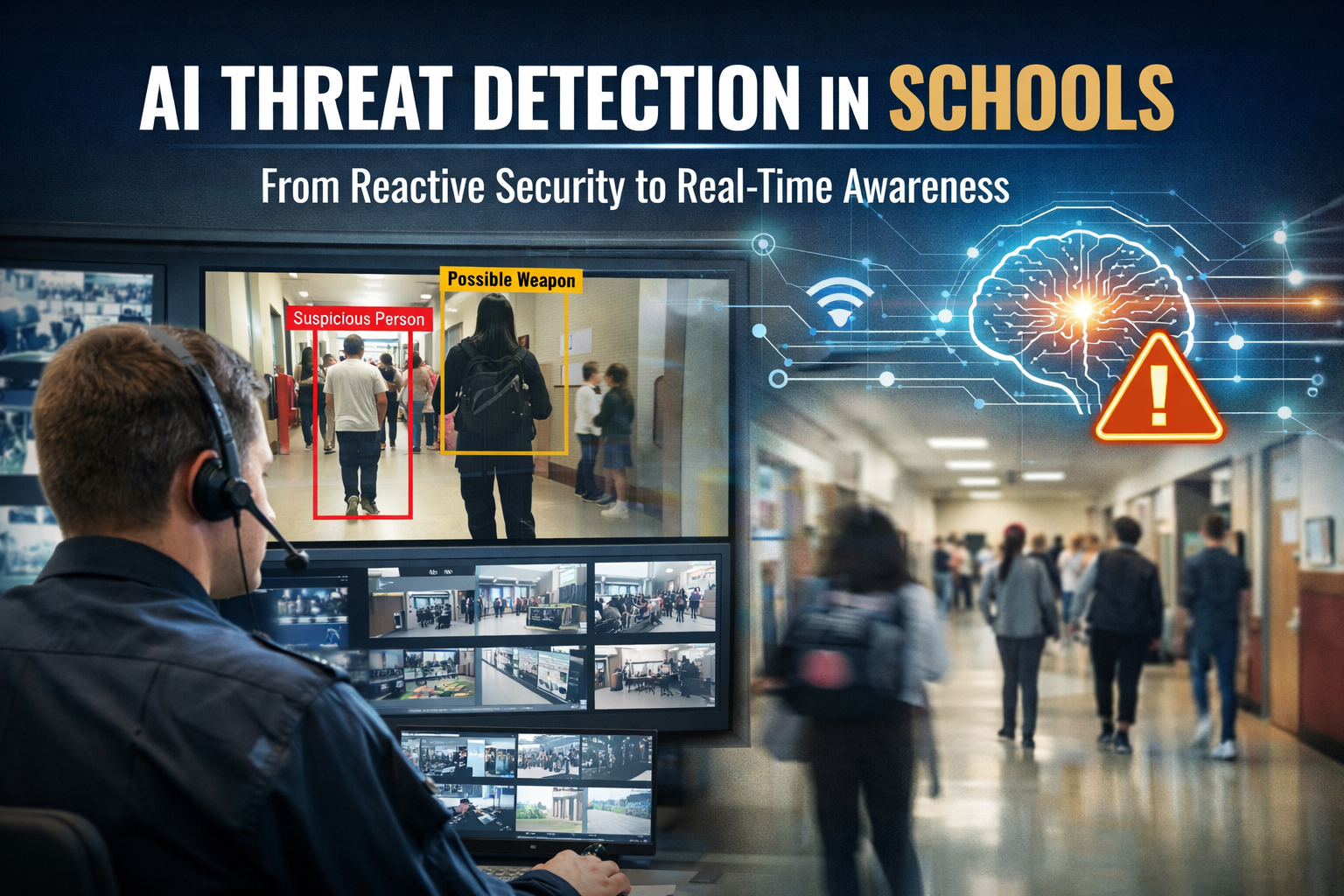
Cloud-managed access control with credential audit trails. Continuous video surveillance covering entry points, common areas, parking, and amenity spaces, with retention measured in weeks rather than days. Video intercoms at every entry that allow remote management and create a record of every guest interaction. Increasingly, AI-driven video analytics that can detect and alert on incidents in progress rather than serving only as a post-incident forensic tool. Documented service and maintenance — because a camera that was offline on the day of the incident is, for liability purposes, often worse than no camera at all.
The throughline is that these systems must produce records. The technology is valuable for deterrence and operations, but its insurance and liability value comes from creating a contemporaneous, tamper-resistant account of what happened, when, and who was involved.
The Reframe: From Cost Center to Risk Mitigation
The conversation owners have historically had about security has been a cost conversation. The right way to have it in 2026 is as a total-cost-of-risk conversation that includes insurance premiums, deductibles, retention, the realistic possibility of a large verdict, and the operational disruption that any significant incident creates.
A building that invests in modern, well-maintained security infrastructure is buying down a category of risk that was previously priced into the insurance premium. In hard markets, that buy-down can be the difference between a renewal at manageable terms and a non-renewal that forces the owner into the surplus lines market at a materially higher cost.
It also changes the posture of the owner if and when a claim does occur. Defending a negligent-security case with strong contemporaneous records, documented policies, and current-generation systems is a fundamentally different exercise than defending one without those things.
Where to Start
Owners and operators rethinking their security posture in this environment generally benefit from a structured assessment rather than a piecemeal upgrade. The right starting point is a walk of the property with someone who understands both the technology landscape and the underwriting questions carriers are asking today — looking specifically at entry control, common-area coverage, parking, amenity access, and the retention and accessibility of the records the systems are producing.
The gap between a property's current security posture and the posture its insurance carrier is going to expect at the next renewal is often smaller than owners assume — and the cost of closing that gap is almost always smaller than the cost of not closing it.